
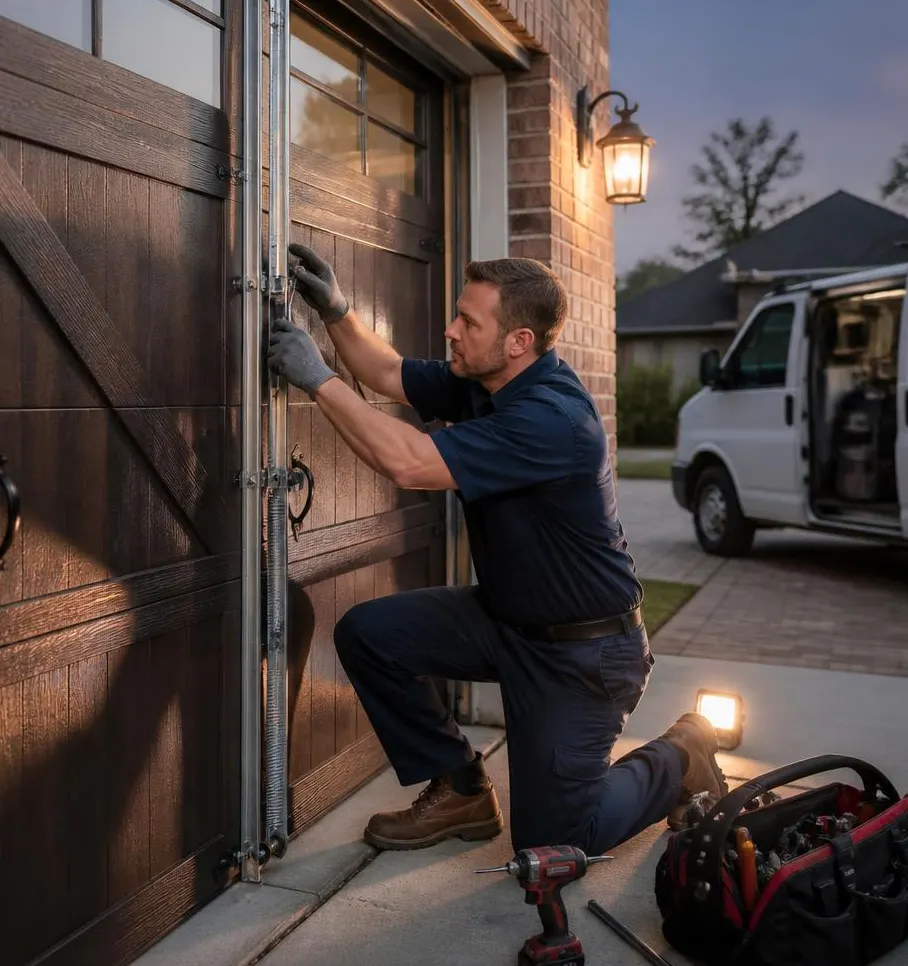
Grinding usually means metal is wearing against metal somewhere in the roller or track system. Squealing is almost always a lubrication problem. Popping points to tension built up in the spring or cable system. Rattling means something has come loose. Once you know which sound you're hearing, the rest is just working through the likely causes in the order a technician would check them.
Grinding: A Deep, Mechanical Sound
Grinding usually sounds like it's coming from inside the track as the door moves, and it often gets louder in the same spot every cycle. It's a sign that hard parts are rubbing without anything softening the contact.
- Rollers. Nylon rollers wear down over years of use, and once the bearing inside fails, you get a grinding or grating sound with every pass. The fix is a straightforward roller swap, usually done in sets so wear stays even.
- Track alignment. A bent or misaligned track forces the rollers to fight their way through, which grinds metal against metal. A technician checks the track with a level and either realigns the brackets or replaces the damaged section.
- Opener drive gear. On chain and belt-drive openers, the plastic drive gear inside the motor housing wears out over time. If the grinding is coming from the opener itself rather than the door, this gear (or the opener) needs replacing.
Squealing: A High-Pitched Cry
Squealing is friction looking for lubrication. It's common on the first cool mornings of the year and tends to fade slightly as the door warms up and moving parts loosen.
- Dry hinges, rollers, and tracks. This is the first and most common cause. The fix is cleaning off old grease and dust buildup, then applying a silicone or lithium-based garage door lubricant — not WD-40, which attracts dust rather than repelling it.
- Worn roller bearings. If lubrication doesn't quiet things down, the bearing inside the roller itself may be shot and needs replacing.
- Torsion spring coils. Rust or dried-out lubricant can cause the coils to rub against each other as the spring winds and unwinds. A technician will lubricate the spring, and if rust has set in deep, recommend replacement.
Popping: A Sudden Bang or Snap
Popping is different from the other sounds because it's usually a single sharp noise rather than a continuous one, often with a slight jerk in the door's movement.
- Torsion spring catching. A coil that's binding or a spring reaching the end of its cycle life can pop as it releases tension unevenly. Spring systems store a lot of force, and diagnosing or replacing them is not a DIY job — this is where spring replacement comes in.
- Cable or pulley slipping. A cable that's jumped its pulley track will pop when it catches and resets under load. This gets inspected and reseated or replaced if frayed.
- Loose hardware or flexing panels. Temperature swings between warm days and cool nights can make metal panels expand and contract, popping against loose brackets. Tightening hardware usually resolves this.
Rattling: A Loose, Shaky Sound
Rattling is the easiest to diagnose because it almost always means something is loose rather than worn out.
- Loose hardware. Bolts on hinges, brackets, and track supports work themselves loose over thousands of open-and-close cycles. A full tightening pass with a wrench is often all that's needed.
- Worn hinges. Hinges with excess play let panels shift slightly as the door moves, creating a rattle. These get replaced individually as needed.
- Opener chain or belt tension. A chain-drive opener with too much slack will rattle against the rail. Adjusting tension to the manufacturer's spec usually solves it.
A Seasonal Note for Rio Vista
Heading into the drier months with wildfire-season dust still settling on everything outdoors, grease on tracks and rollers collects grit fast, which turns a quiet squeal into a grinding noise if it's not cleaned out first. As winter rain moves in, moisture speeds up rust on hardware and torsion springs, especially on older doors that haven't been serviced in a while. Fall is a good window to get ahead of both issues before the wet season sets in.
When to Call Precision Garage Door of Rio Vista
If tightening hardware and lubricating moving parts doesn't quiet things down, or if you're hearing popping that suggests spring trouble, it's time to call in a technician. Precision Garage Door of Rio Vista handles both ends of this: our Garage Door Maintenance service covers a full inspection, lubrication, and hardware tightening to catch small issues before they become loud ones, and our Spring Replacement service safely swaps out worn or damaged springs using the right tools and tension-handling equipment — not something to attempt with a ladder and a wrench.
If your garage door in Rio Vista, CA is making noises that don't go away with a little grease and a tighter bolt, give us a call. We'll figure out exactly what's causing it and get it fixed right the first time.